Our Technologies

Oil-less piston compressors

How Oil-Less Piston Compressors Work: Technology, Components, Physics, and Industrial Applications

Oil-less piston compressors are a reliable and clean source of compressed air or vacuum, widely used in industries that demand contamination-free operation. Unlike traditional oil-lubricated compressors, these machines are designed to operate without lubricating oil in the compression chamber, making them suitable for applications in medical, pharmaceutical, food, and laboratory environments. Below, we break down how they work, their essential components, the physics behind air compression, performance ranges, and real-world industrial uses.

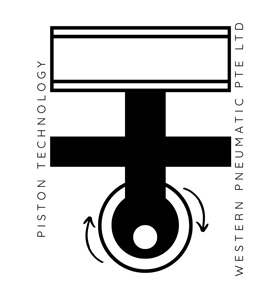
Oil-less piston compressors function on the principle of positive displacement. A piston moves within a cylinder, reducing the chamber volume and increasing the air pressure. In a vacuum configuration, the same mechanism removes air from a sealed space, creating negative pressure. Because no oil is present inside the compression chamber, specially engineered materials such as Teflon-coated rings, composite bearings, and self-lubricating polymers are used to reduce friction and wear.

The compression process can be either single-stage (air compressed once) or two-stage (air compressed twice for higher pressures). This makes them adaptable across a wide pressure range depending on application needs.

  • Electric Motor
    Provides rotational energy to drive the crankshaft, which converts rotary motion into linear piston movement.
  • Crankshaft and Connecting Rod
    Translates the rotational motion of the motor into reciprocating motion for the piston.
  • Piston Assembly
    The piston, fitted with oil-free piston rings, moves up and down inside the cylinder to compress air.
  • Cylinder Block
    A precision-engineered chamber where compression occurs. Its surfaces are designed with coatings or materials to reduce friction without lubrication.
  • Inlet and Exhaust Valves
    • Inlet Valve opens when the piston moves downward, allowing ambient air to enter.
    • Exhaust Valve opens when the piston moves upward, releasing compressed air into the receiver tank or vacuum outlet.
  • Cooling System
    Since compression generates heat, fins or external fans dissipate excess thermal energy. Some designs include air or water jackets for enhanced cooling.
  • Silencers and Filters
    Minimise intake noise and prevent contaminants from entering the compression chamber, ensuring clean and quiet operation.
  • Receiver Tank (for pressure systems)
    Stores compressed air for stable output and prevents pulsation during usage.
  • Physics Behind Air Compression and Vacuum Generation
  • The operation of an oil-less piston compressor is governed by Boyle’s Law (P × V = constant at constant temperature). As the piston moves upward, the air volume decreases, causing the pressure to rise.
  • Compression Mode (Positive Pressure):
    The piston compresses air into a smaller volume. Once pressure exceeds the downstream line pressure, the exhaust valve opens, releasing high-pressure air.
  • Vacuum Mode (Negative Pressure):
    When configured as a vacuum pump, the piston’s downward stroke reduces pressure inside the cylinder below atmospheric pressure. The pressure difference forces ambient air or gas from the connected chamber into the compressor, generating vacuum.
Because no oil film is present, all frictional components rely on dry-running seals, advanced composites, and engineered clearances to maintain efficiency and durability.
  • Effective Pressure and Vacuum Range
  • Pressure Range: Typically 3 to 10 bar (45 – 145 psi) for standard industrial models. Multi-stage versions can achieve higher pressures up to 15 bar.
  • Vacuum Range: Oil-less piston vacuum pumps generally achieve vacuum levels of 100 to 200 mbar absolute (80–90% vacuum), suitable for most laboratory, packaging, and medical suction applications.
  • Medical and Dental Equipment
    Provides clean compressed air for breathing systems, dental chairs, and surgical tools where oil contamination is unacceptable.
  • Pharmaceutical and Biotechnology
    Used for vacuum filtration, aeration of cultures, and clean compressed air for packaging.
  • Food and Beverage Industry
    Ensures oil-free compressed air for packaging machines, pneumatic conveying, bottling lines, and nitrogen generation.
  • Laboratories and Research Facilities
    Supplies vacuum for filtration, evaporation, and aspiration processes, while providing compressed air for instrumentation.
  • Electronics and Semiconductor Manufacturing
    Provides clean, particle-free air for precision assembly and testing.
  • Packaging Industry
    Vacuum pumps in thermoforming and blister packaging machines rely on oil-free piston technology for hygiene and reliability.