Air driven Pumps and Equipment
How Air Technology Helps in Driving Pumps and Equipment Across Industries
Air technology, often referred to as pneumatic power, has become one of the most versatile and reliable solutions for driving pumps and equipment in modern industries. By harnessing the power of compressed air, companies achieve safe, efficient, and cost-effective operations without relying entirely on electrical or hydraulic systems. From food and beverage manufacturing to oil & gas exploration, compressed air ensures processes continue smoothly under the toughest conditions.
What Is Air Technology in Driving Pumps and Equipment?
Air technology in this context refers to the use of compressed air as a power source for operating pumps, mixers, conveyors, and process equipment. Instead of electricity or combustion engines, compressed air drives the mechanical motion needed to move fluids, mix ingredients, or operate production machinery.
This approach is particularly advantageous in industries where safety, hygiene, and reliability are paramount. For example:
- In the chemical industry, air-operated pumps prevent ignition risks when handling volatile or flammable liquids.
- In pharmaceuticals, compressed air maintains sterile conditions without introducing contaminants.
- In food and beverage production, pneumatic drives eliminate concerns about lubrication oils or electrical sparks contaminating products.
How the System Works – Step by Step
The working principle of air-driven equipment is straightforward yet powerful:
- Air Generation
Ambient air is pulled into a compressor and pressurised, usually between 6 to 10 bar (87 to 145 psi), depending on the system requirements. The compressed air is stored in a receiver tank that ensures a continuous, stable supply. - Air Treatment and Conditioning
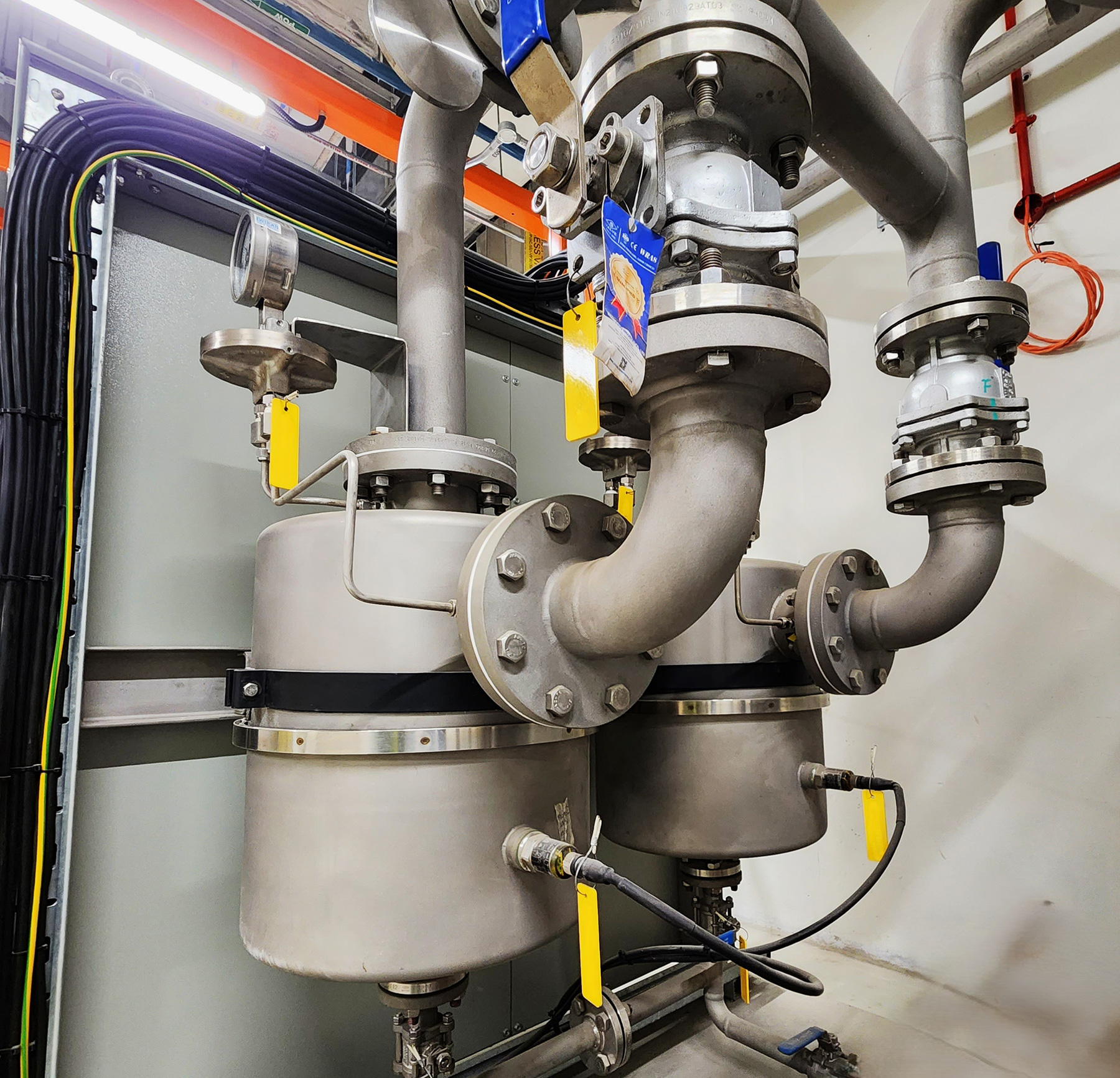
To ensure long equipment life and optimal efficiency, the compressed air is filtered, dried, and regulated. Moisture separators, oil filters, and pressure regulators remove impurities that could otherwise damage pumps or valves. - Distribution Network
A system of pipelines distributes compressed air to different equipment stations across the facility. The network can be designed for single lines or complex ring mains, ensuring equal pressure at multiple usage points. - Pump or Equipment Operation
Once directed into the pump or tool, the compressed air creates motion:- Air-operated diaphragm pumps (AODD) – Compressed air alternates between chambers, flexing diaphragms to displace liquid efficiently.
- Air-driven piston pumps – Convert compressed air into reciprocating motion for high-pressure fluid transfer.
- Pneumatic agitators and mixers – Air motors rotate shafts and impellers for continuous blending.
- Vacuum generators and ejectors – Use compressed air to create suction for material handling and packaging processes.
- Control and Automation
Pneumatic valves, programmable logic controllers (PLC), and flow regulators provide full control over air delivery, enabling automated start/stop sequences, variable speed operations, and safety shutdowns.
Applications of Air Technology in Different Industries
Air-driven pumps and equipment are widely used across multiple sectors due to their adaptability:
Advantages of Air Technology for Driving Pumps and Equipment
- Safety First – No sparks, heat, or electrical currents, making them ideal for flammable or explosive environments.
- Durability – Pneumatic systems have minimal moving parts and can withstand harsh industrial conditions.
- Cost-Effective – Reduced maintenance requirements lower lifecycle costs.
- Energy Efficient – When integrated with smart controls and variable air supply, energy savings are achieved.
- Versatility – Suitable for liquids, slurries, powders, or delicate ingredients.
- Eco-Friendly – Compressed air is clean, oil-free, and sustainable when paired with energy-efficient compressors.
Why Industries Choose Air-Driven Systems
Compared to electrically driven pumps, air-operated equipment provides superior safety and adaptability. Unlike hydraulics, there are no messy fluids to leak or cause environmental concerns. Companies benefit from longer equipment life, lower risk of downtime, and compliance with international safety standards (ATEX, FDA, GMP, etc.).
Whether it’s transferring corrosive chemicals, blending ingredients in food production, or managing slurry in mining, air-driven pumps and equipment provide a future-proof solution that meets the highest standards of safety, hygiene, and reliability.