Our Technologies

Air Operated Double Diaphragm Pump

How Air Operated Double Diaphragm (AODD) Pumps Work: Principles, Components, Advantages, and Industry Applications

Air Operated Double Diaphragm (AODD) pumps are versatile, positive displacement pumps that use compressed air as their power source. Known for their ability to handle a wide variety of fluids—including corrosive chemicals, slurries, viscous media, and abrasive liquids—AODD pumps are widely used in industries such as chemical processing, food and beverage, mining, water treatment, and pharmaceuticals.

This article explains how AODD pumps work, details their essential components, describes the physics behind how vacuum and compressed air drive the pumping process, and compares their advantages and disadvantages.

An AODD pump operates using compressed air instead of electricity. The principle is straightforward: compressed air alternately drives two flexible diaphragms connected by a common shaft. As one diaphragm is pushed outward, it creates suction on the opposite side, drawing liquid into the chamber. When the air valve switches, the second diaphragm is pushed, expelling fluid from the chamber into the discharge line.

This alternating motion of the diaphragms ensures a continuous flow of liquid. The suction and discharge cycles are controlled by check valves that open and close depending on pressure differentials.

Step-by-step operation:

  • Compressed air enters the pump through the air distribution system.
  • First diaphragm moves outward, creating a vacuum that draws fluid into the pump chamber.
  • Second diaphragm compresses inward, discharging fluid through the outlet.
  • The air valve automatically shifts, reversing the airflow and repeating the cycle.
  • Air Distribution System (Air Valve): Directs compressed air alternately to each diaphragm chamber.
  • Diaphragms: Flexible membranes (rubber, PTFE, or elastomers) that create suction and discharge pressure.
  • Pump Chambers: Hold the fluid during suction and discharge phases.
  • Check Valves (Ball or Flap): Prevent backflow and ensure one-directional fluid movement
  • Manifolds (Suction & Discharge): Connect the pump to piping systems.
  • Center Section (Shaft): Links the two diaphragms for synchronized motion.
  • Casing/Body: Constructed from metals (stainless steel, aluminum) or plastics (polypropylene, PVDF) depending on fluid compatibility

The working principle of AODD pumps is based on compressed air energy conversion. When air pressure is applied to one diaphragm, it exerts force over the surface area of the diaphragm, generating fluid displacement.

  • Vacuum Creation: As one diaphragm retracts, it reduces the pressure inside the fluid chamber. This pressure differential between atmospheric pressure and chamber pressure draws liquid into the pump.
  • Compressed Air Drive: The compressed air creates a reciprocating action by alternating between the diaphragms.
  • Positive Displacement: The movement of diaphragms ensures a fixed volume of fluid is transferred per cycle, making AODD pumps precise and reliable.
Unlike centrifugal pumps that rely on velocity and kinetic energy, AODD pumps rely entirely on pressure differentials and diaphragm flexing, which allows them to handle both low and high-viscosity fluids with minimal shear.

AODD pumps can typically achieve a vacuum lift of up to 6–8 meters (20–26 feet) depending on the pump size, diaphragm material, and operating conditions. This makes them suitable for self-priming applications and dry-running scenarios without damaging the pump.
For discharge pressure, AODD pumps can operate up to 7–8 bar (100–120 psi), limited by the available compressed air pressure.

Advantages of AODD Pumps

  • Versatility: Handles abrasive, viscous, shear-sensitive, and corrosive fluids.
  • Self-Priming: Capable of dry start and suction lift without auxiliary equipment.
  • Explosion-Proof: Since powered by compressed air, safe in hazardous and flammable environments.
  • Gentle Pumping: Low shear, ideal for delicate materials like food products or biological fluids.
  • Portable & Simple Design: Easy to install and relocate without complex electrical connections.
  • Run-Dry Capability: Can operate without fluid for short periods without damage
FeatureAODD PumpElectric-Centrifugal Pump
Power SourceCompressed AirElectricity
Flow TypePositive DisplacementKinetic Energy Transfer
Fluid HandlingViscous, Abrasive, CorrosiveBest for clean, low-viscosity liquids
Self-PrimingYesOften requires priming
Explosion SafetyIntrinsically SafeRequires ATEX/IECEx motors
Flow SmoothnessPulsatingContinuous
  • Industry Applications of AODD Pumps
  • Chemical Processing: Transfer of acids, solvents, and corrosive fluids.
  • Mining: Handling of slurry, tailings, and dewatering tasks.
  • Food & Beverage: Pumping sauces, syrups, and dairy products without damaging texture.
  • Pharmaceuticals: Transfer of sensitive and sterile fluids.
  • Oil & Gas: Safe transfer of fuels, lubricants, and drilling muds.
  • Water Treatment: Dosing chemicals, sludge transfer, and wastewater handling.
  • Paints & Coatings: Transfer of viscous paints, inks, and adhesives.
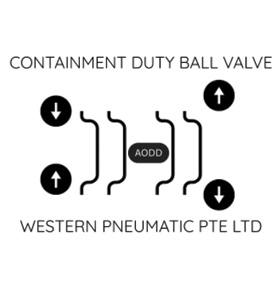
Containment Duty AODD Pumps (Leak-Free / Double Containment Design)

Containment duty AODD pumps are engineered for hazardous, toxic, corrosive, or environmentally sensitive fluids. They incorporate a secondary containment system to prevent external leakage in the event of diaphragm failure.

These pumps are commonly used in chemical processing, pharmaceutical production, specialty chemicals, and high-risk solvent transfer applications.

Double Diaphragm System
In addition to the primary diaphragm, a secondary containment diaphragm or backup membrane is installed. If the primary diaphragm ruptures, the secondary barrier prevents fluid escape.

Leak Detection Port / Monitoring System
Many containment models include:

  • Pressure sensors
  • Visual leak indicators
  • Conductivity probes
  • Automatic shutdown systems
  • These allow early detection before environmental contamination occurs.

Sealed Center Section
Unlike standard AODD pumps where exhaust air is vented directly to atmosphere, containment pumps may isolate the air section to prevent vapor release.

PTFE or Engineered Elastomer Diaphragms
Used for aggressive chemicals such as acids, chlorinated solvents, or high-purity process fluids.

In a standard AODD pump, if a diaphragm fails, fluid can enter the air chamber and be expelled through the exhaust. Containment pumps interrupt this failure path.

When rupture occurs:

  • Process fluid is trapped within the containment chamber.
  • Pressure differential triggers monitoring systems.
  • Operation can be stopped before environmental release.
  • This design ensures compliance with strict industrial safety standards.

Advantages

  • Zero-leak design for hazardous chemicals
  • Reduced environmental risk
  • Compliance with stringent plant safety requirements
  • Suitable for high-purity or toxic service

Disadvantages

  • Higher capital cost
  • More complex maintenance
  • Slightly larger footprint
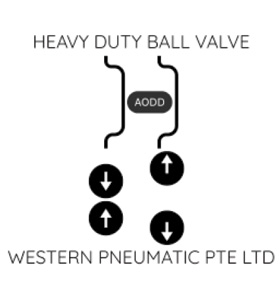
Heavy Duty Ball Valve AODD Pumps

Heavy duty ball valve AODD pumps are the most common industrial configuration. They use spherical check balls that seat against precision-machined valve seats to control suction and discharge flow.

These pumps are widely used in chemical plants, wastewater treatment, general manufacturing, and fluid transfer operations.

Each fluid chamber contains:

  • One suction ball valve
  • One discharge ball valve

During diaphragm retraction:

  • Vacuum forms in the chamber.
  • Suction ball lifts due to pressure differential.
  • Fluid enters the chamber.
  • Discharge ball remains seated.

During diaphragm compression:

  • Suction ball seats.
  • Discharge ball lifts.
  • Fluid exits the pump.
  • The sealing occurs due to gravity, backpressure, and fluid column weight.

Industrial-grade ball valve AODD pumps typically feature:

  • Reinforced center blocks
  • Thick-walled pump housings
  • Hardened valve seats
  • Stainless steel or alloy internals
  • Solid PTFE or Santoprene diaphragms
  • They are designed for continuous 24/7 operation.
  • Clean to moderately abrasive liquids
  • Chemical dosing systems
  • Solvent transfer
  • Paint and coating transfer
  • General process fluids

Advantages

  • Excellent sealing performance
  • Reliable operation with moderate solids
  • High pressure capability (up to 8 bar)
  • Simple maintenance
  • Good chemical compatibility range

Disadvantages

  • Not ideal for large or fibrous solids
  • Ball valves can wear under abrasive slurry conditions
  • May clog with stringy materials
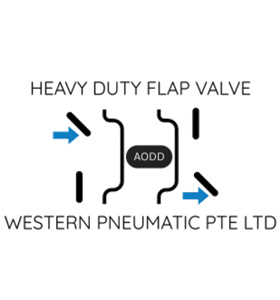
Heavy Duty Flap Valve (Flapper Valve) AODD Pumps

Flap valve AODD pumps use elastomeric flapper valves instead of ball check valves. These are specifically designed for handling large solids, sludge, and viscous slurry.

They are widely used in mining, wastewater treatment, construction, tunneling, and dewatering operations.

Instead of spherical balls, flexible flaps act as check valves.

During suction:

  • Vacuum pulls the flap inward.
  • Fluid and solids enter the chamber.
During discharge:
  • Pressure forces the suction flap closed.
  • Discharge flap opens.
  • Solids are expelled without obstruction.
  • This design allows the passage of larger solids compared to ball valve types.

Heavy duty flap valve pumps can typically handle:

  • Solids up to 25–75 mm (depending on pump size)
  • Thick sludge
  • Fibrous materials
  • High-viscosity media
  • The open flow path minimizes clogging.

Flap valves are generally:

  • Reinforced rubber or polyurethane
  • Replaceable wear components
  • Designed for slurry abrasion resistance
  • Pump casings are usually cast iron, stainless steel, or hardened alloy for mining duty.

Advantages

  • Superior solids handling
  • Reduced clogging risk
  • Ideal for slurry and dewatering
  • Lower maintenance in abrasive environments

Disadvantages

  • Lower sealing precision compared to ball valves
  • Reduced efficiency with clean, low-viscosity fluids
  • Larger and heavier construction