Driving Mixers or stirrers
Air Technology in Industrial Mixing: How Pneumatics Drive Mixers and Stirrers
In modern industries, efficient mixing is crucial for producing consistent, high-quality products. Whether in food processing, pharmaceuticals, chemicals, wastewater treatment, or paints and coatings, the reliability and performance of mixers and stirrers directly impact productivity and product quality. One advanced solution that has transformed mixing operations is air technology, also known as pneumatic drive systems.
What is Air Technology in Mixing Systems?
Air technology refers to the use of compressed air as a power source to drive mechanical equipment such as mixers and stirrers. Instead of relying on electric motors or manual operation, pneumatic systems utilize the force of compressed air to rotate shafts, blades, or paddles inside mixing tanks.
This method provides several advantages, including:
- Safety – Air-driven mixers reduce risks in hazardous or explosive environments where electric sparks must be avoided.
- Efficiency – Pneumatics deliver consistent torque and speed for uniform mixing.
- Durability – Air-powered mixers require less maintenance compared to electrical counterparts.
- Flexibility – Speed and torque can be easily adjusted by regulating air pressure.
How Does Air Technology Work in Mixers and Stirrers?
The working principle of air-driven mixers and stirrers can be broken down into several steps:
- Compressed Air Supply
Air is compressed using an industrial compressor and delivered through pipelines to the pneumatic mixer unit.
- Air Motor Activation
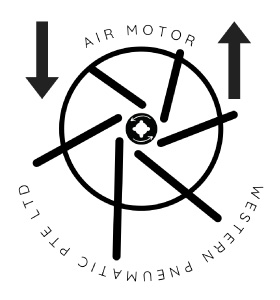
The compressed air enters an air motor, a device that converts pneumatic energy into rotational motion. Depending on the design, this can be a vane motor, piston motor, or turbine motor.
- Torque and Speed Regulation
Operators can control the airflow using regulators and valves, which adjust the motor’s speed (RPM) and torque output. This allows precise mixing control based on the material’s viscosity and density.
- Agitation and Mixing
The air motor drives the mixer shaft and blades, creating agitation inside the tank. This ensures proper blending, dispersion, emulsification, or suspension of solids, liquids, or gases.
- Continuous and Safe Operation
Since no electricity is directly involved at the mixing point, air-driven mixers are safer in explosive atmospheres (ATEX-rated zones) and can operate continuously with minimal downtime.
Applications of Air Technology in Mixing Across Industries
Air-powered mixers and stirrers are widely used across industries where safety, precision, and efficiency are top priorities:
Why Choose Air Technology for Mixing?
Adopting air-powered mixers offers industries multiple operational benefits:
- Explosion-proof operation – Ideal for flammable or hazardous atmospheres.
- Low maintenance – Fewer moving electrical parts reduce wear and tear.
- Energy efficiency – Compressed air systems can be optimized for continuous use.
- Adaptability – Works with different mixing blades and vessel sizes.
- Longer service life – Resistant to overheating and overload.