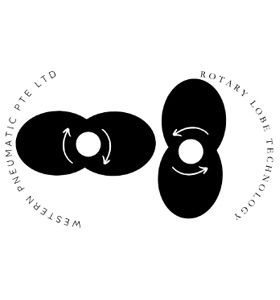
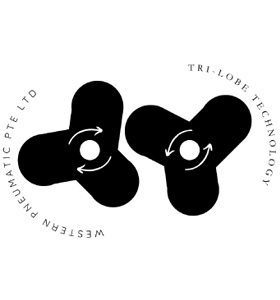
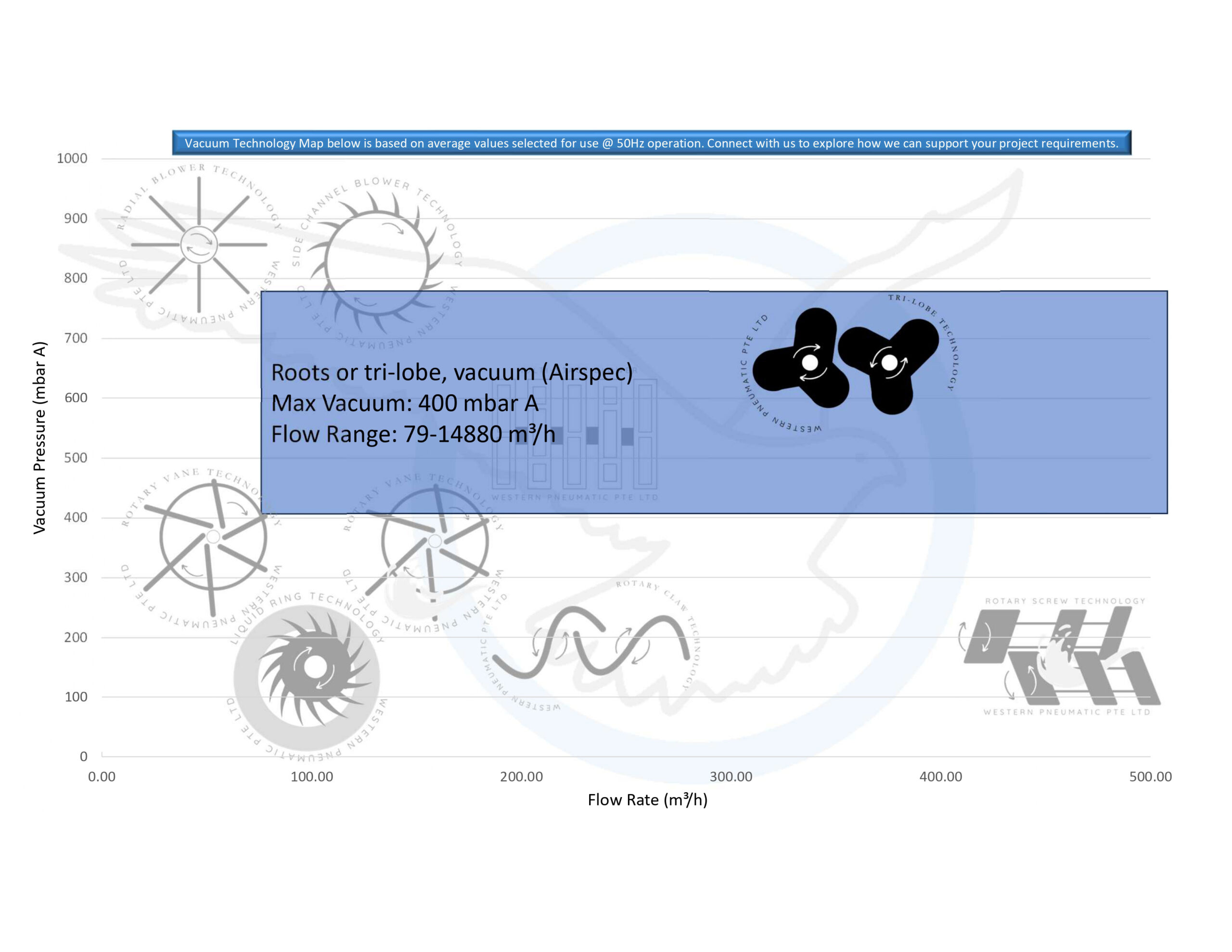
In industrial air movement and vacuum generation, rotary lobe blowers play a vital role in ensuring reliable, oil-free, and consistent airflow. Among the most common designs are the two-lobe blower (Roots blower) and the tri-lobe blower. Both technologies are positive displacement machines, designed to deliver large volumes of air at low pressures or create vacuum at low absolute pressures. While their fundamental operating principle is similar, subtle differences in rotor geometry, efficiency, and performance characteristics distinguish the two.

Both two-lobe and tri-lobe blowers operate on the positive displacement principle. The device consists of two rotors mounted on parallel shafts within a precisely machined housing. These lobes rotate in opposite directions without contacting each other or the casing, thanks to a synchronizing timing gear system.
This external compression process results in pulsating flow in two-lobe blowers, whereas tri-lobe designs mitigate pulsation by offering smaller displacement volumes per rotation.
The blower itself does not compress air internally. Instead, it delivers displaced air volume into a system where:
| Feature | Two-Lobe Blower | Tri-Lobe Blower |
|---|---|---|
| Rotor Geometry | Two lobes (180°) | Three lobes (120°) |
| Pulsation & Noise | Higher pulsation, noisier | Reduced pulsation, quieter |
| Efficiency | Moderate | Higher due to smoother flow |
| Vibration | Higher vibration | Lower vibration |
| Operating Speed | Lower speed range | Can operate at higher speeds |
| Cost | Generally lower | Slightly higher due to complexity |
| Applications | Traditional industries, where cost is critical | Modern industries, where efficiency and noise control are important |
Both two-lobe and tri-lobe blowers find applications in industries where oil-free air movement and low-pressure conveying are required. Common applications include: